The Garage Museum of contemporary Art is found in Moscow. Once the 1960s Vremena Goda, the structure was left derelict for many years and in 2008 was taken on, and adapted to create a gallery and space of creativity, consisitng of cafes, restaurants, galleries and creative centres.
The structure itself and the buildings history remains very much in tact with the structure visable throughout the formdue to the polycarbonate cladding. The raw materiality of the building itself, is very much exposed and playful much like the art within. It uses mosaics, tiles and brick as well as new architectural technologies to create levels of intrigue and enhance the artwork it houses.
The use of polycarbonate and glass as cladding materials is also very interesting in terms of create a spcae filled with natural light which connects to the surrounding parkland but also allows for an element of privacy.
in an interview with Dezzen last year, acclaimed architect Phillip K Smith spoke about his journey from and architect to an artist. Smith who produces a range or art commissions produces his works based on the built environment. Perhaps his most well know piece being Lucid Stead, a 70 year old shack in the middle of the Californian dessert stripped with mirrored cladding to create the illusion that the shack is transparent.
Lucid Stead, High desert, California, USA
The Oxford dictionary defines the artist as someone who “practises or performs any of the creative arts, such as a sculptor, film-maker, actor, or dancer” and the architect as someone who “designs buildings and in many cases also supervises their construction”. the words design and creative arts are the two coupling terms here suggesting there may be overlaps between the two professions.
To design a building is to creatively divide space into functional blocks that meet the desired use of the building. However the form that architects derive around these spaces is for me what constitutes as art. take Zaha Hadid’s practice outrageously curvy organic buildings. the elegance of such sumptuous curves serves little functional need in terms of space its main purpose is to appease the user via its appearance. This romanticism is similar to that of a painting in the sense it serves no functional purpose in the sense of space, it’s just pretty to look at.
however artists alike architects often portray metaphorical meanings behind there forms. Van Gogh one of the great artists of human history created many a painting that at a glance may just appear light and joyful. However behind such paintings such as sunflower there is much greater meaning; one could argue he connotes themes of life and death with the celebration of bright green and yellows contrasted with the withered flowers.
Sunflower – Vincent Van Gogh
The Reichstag’s dome in Berlin, by Norman Foster at a glance is just large glass dome letting light into the grand parliament building. However one could also argue that it’s a statement that in our ever changing political landscape are democratic government should be more transparent. the dome funnels down into the debating chamber below, giving visual access and transparency from the public platform above.
REichstag Dome, Berlin, Germany – Norman Foster Architcts
“Here East is a meeting point. Creative businesses growing in scale collide with businesses of scale growing in creativity.”
Here East Situated in Queen Elizabeth Park, is part of the repurposing of Strucutres in the London 2012 Olympic Games. Formerly the housing for equipment used in the Broadcasting centre the open structure has been readapted to house wikihouses.
The re-imagined cabinet of Curiosities, is now used to encourage local spirits of creativity and innovation. Historically the area was industrial and priovusly home to factories such as the Toy Match Box Factory and Refresher sweets. this is refelected in the key unique designs of each Wikihouse, represented in the cladding of each.
Not only is the architecture trying into inspire innovation in new growing talent but is doing itself, being on the cusp of innovative technology. The structures can be assembled within the space of a couple of days, thorugh the use of CNC cut frames delivered to site and put together much like a puzzle.
The Structure in its entirety, not only form, but also function inspires elements of creativity and is a prime example of the continual links between art and architectrue, encompassing all element s of design and technology.
“Perspective may justly be considered the colouring of Architecture.” J.M.W. Turner, 1810
Blenheim Palace, in association with The Ashmolean Museum presents: The Young Turner: Ambitions in Architecture and the Art of Perspective
The Young Turner exhibition is found in the
stables behind Blenheim Palace, a perhaps more modest gallery than others in
which Turner’s work has been exhibited, but this only seeks to make the artworks
and prints inside stand out more. In total there are 30 artworks on display,
including watercolours, engravings, and sketches.
South View of Christ Church from the Meadows 1798-9 Joseph Mallord William Turner Source: Link
J.M.W. Turner is arguably one of Britain’s most famous landscape
artists. While more well-known in the art world as the forefather to the Impressionist
movement with his emphasis on colour over form in his later works, Turner’s earlier
works are often neglected. This exhibition aims to shed some light over Turner’s
earlier works, which focus more on architectural representation and landscape
depiction.
During the first 15 years of his career, Turner painted over
30 finished watercolours of views in and around Oxford. Turner was very drawn
to the Gothic architecture of the city, especially in the sense of atmosphere
and intricate detailing common in the style. This inspiration is clear throughout
his works as Turner starts to play more with light and space in compositions.
The Young Turner: Ambitions
in Architecture and the Art of Perspective is at Blenheim Palace until 22
April 2019, before moving on to Worcester City Art Gallery (4 May – 6 July
2019) and then Banbury Museum. (28 September 2019 – 11 January 2020) If you are
interested in landscape art, art history or just fancy a day out, I highly
encourage you pay this a visit! (Don’t forget a sketchbook!)
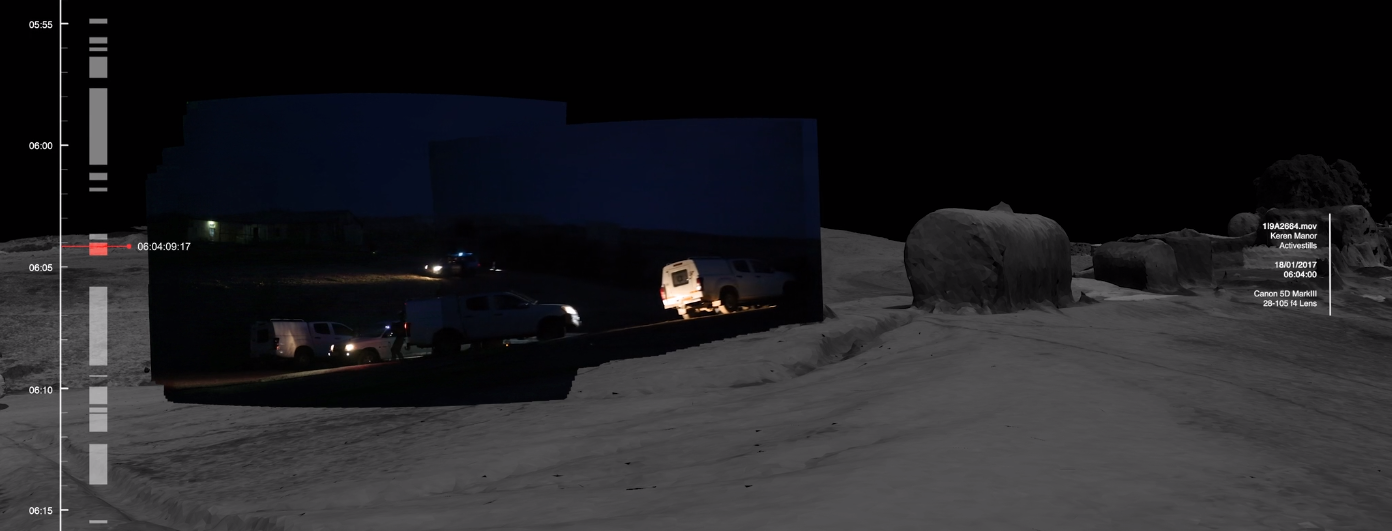
Snippet from Forensic Architectures video investigating the murder of Abu al-Qi’an (A maths teacher living on the Israel Palestine Border)
I went to see Eyal Weisman speak at Oxford University. Forensic Architecture (his practice) are a research agency that undertakes investigations on behalf of international prosecutors and human rights organisations; producing architectural evidence as a tool for social justice.
This lecture focused on the conflict and displacement of Palestinian Settlements along the border. This was the investigation of the Umm Al Harin killings, which occurred during an Israeli Police raid on the Bedouin Village. The Israeli Government presented these murders as a terrorist attack upon the police who acted in self defense in an attempt to cover up their wrongdoing. However, upon further investigation their facts did not add up. Using 3D modelling software alongside footage with audio recovered from the scene they were able to prove the innocence of the victim, and undermine the Israeli Governments legal grounds for the killing of the Palestinian maths teacher, and their evidence will be used in a legal appeal against them.
Essentially, the police described the incident as a vehicle charging towards the Israeli Police and hence they had grounds to retaliate against him. However, with analysis of video, audio the physics of the vehicles movement they were able to prove that acceleration of the car occurred after Abu al-Qi’an (the maths teacher fleeing the raided village) was shot in the leg causing him to apply pressure to the accelerator. Watch their analysis at the link below as it is really incredible. Their work forced the Israeli Government to go back on their statement, which is almost unheard of for them to apologise.
They then went further, in order to disprove the Israels legal justification for the displacement of the settlements. By legal definition a desert does not belong to anyone, and hence the village had no legal grounds to be their. Forensic Architecture looked at how the Israeli Government have been manipulating the water through dams along the border in order to keep the space legally defined as a desert, and hence give them grounds for the destruction of Palestinian homes. Next level site analysis.
Prior to this lecture, I was not too aware of the severe injustices that are occurring in this conflict, and really their work blew my mind – I could not believe some of the stuff I was hearing. The way in which they used architecture as a tool generating their evidence was art in itself. However it was crazy to be reminded by Eyal that this case was just one of many hundreds that occur along the border, and across the world. You can see their other investigations in countries (from Greece through to Syria) at the link here. Their work is incredibly important globally.
Barcelona is a city bursting with cultural landmarks and architectural innovation. Three places in particular provided clear insight into the arts and architecture unique to the city, these were: La Musea Nacional d’Art de Catalunya, The Institute for Advanced Architecture of Catalonia (IAAC), and La Centre de Cultura Contemporània de Barcelona.
Musea Nacional d’Art de Catalunya
The IAAC
The CCCB
The Centre de Cultura Contemporània de Barcelona was an inspiring space. Beginning in the courtyard I found the scale of the building seemed to grow the closer I got to the glass facade, this effect was quite unnerving as it felt like the building could fall on top of me at any moment. The space was equally grand in scale at certain points within the interior, with tall ceilings supported on thick concrete columns. However, at different parts of the building the space seemed to contract to create unique rooms for the purpose of displaying art.
Detailed mural displayed within the interior of the CCCB
Exterior of the CCCB, highlighting the scale and the strange sense of space created by the angled facade.
The Institute for Advanced Art of Catalonia gave me greater insight into the application of technology in architecture. The architects used this technology to create fascinating experimental models, playing with light, materiality, structure and form. It was a real privilege to be able to talk with the tutors and students, they provided a unique perspective on architectural thinking that I wouldn’t have considered otherwise.
Experimental form models
Model depicting interior space, used to examine the impact of light.
Further experimentation models, focusing on forms of envelopes.
Site model depicting the entire city of Barcelona, taking up an entire wall within the IAAC.
La Musea Nacional d’Art de Catalunya allowed me to appreciate some of the classical art of Catalonia. The work on display was awe-inspiring, some of Catalonia’s most influential and renowned artists like Salvador Dali, Antoni Tapies and Pablo Casals. Unfortunately, I was angrily told off for trying to take pictures within the museum.
The scale and surrounding landscape architecture of La Musea Nacional d’Art de Catalunya dwarfs the nearby Barcelona pavilion.
Last summer, I was lucky enough to be offered a placement at an architectural consultants firm in Qatar. This gave me the opportunity to explore museums, libraries and civil infrastructure built at an almost ludicrous scales. The MIA still remains the most impressive and interesting building I was able to explore.
Exterior view of the MIA, illustrating the scale of the building over the waterfront.
Located in Doha, along the Corniche waterfront, the Museum of Islamic art acts as a foundation for the flourishing cultural scene of the city. Historically, Qatar was a country of Nomadic people, with a strong relationship to Islam and a reliance on the coastline for sustenance. The surge in economic growth of the country has allowed the modern built environment to expand greatly, arguably at the cost of historically significant Islamic architecture. Therefore, the MIA (Museum of Islamic Art) takes on the role of preserving and cultivating Islamic Art, allowing the people to gain further understanding and appreciation of the relationship between art and Islamic architecture.
Within a few hours, the exterior of the building had taken on a completely different hue.
Designed by I.M. Pei, the first thing about the MIA that struck me was the sheer scale. The structure stretches out over the water, commanding the attention of the observer. The building is constructed from limestone, this allows the hourly changes in light and shade to be captured by the buildings exterior. Most significantly though, the museum seemed to draw influence from traditional Islamic architecture with the domed roof, pillars and arches reminiscent of famous Mosques.
Interior courtyard, depicting elements of traditional Islamic Architecture in the grand arches. The limestone is shown capturing the changes in light and shade.
The interior of the MIA reflects the same impressive scale of the exterior, adorned with the geometric patterns of Islamic art, making for a humbling experience. The art on display was as varied as it was fascinating, ranging from weapons and armour from centuries of war in the middle east to tapestries, paintings and technology depicting the giant leaps forward in human culture achieved by Islamic architects, scholars and inventors. The interior rooms used a variety of textures and materials, including wood, stone and glass to create a unique environment allowing the observer to focus on the art on display.
This image depicts the materiality of the interior rooms, the alternating textures allowed for each room to portray a different era of Islamic art.
Interior display cases housing armour from the crusades.
Interior display room depicting ancient pottery.
From the ground floor, looking up to the domed roof.
Greece is just started to recover from an economic crisis that has shook the very fabric of the EU. Athens, the capital, like many other major Greek cities has suffered significantly. Riots and violence induced from the crisis often make the front pages of global newspapers. However the political unrest is seen clearest and most vibrantly on the walls of the Athenian urban landscape.
politically aggravated graffiti litters every corner of Athens, there’s no escaping it. Where in Berlin the unrest between western society and the soviet union the murals were displayed on a neat wall running through the city. In Athens the art is everywhere.
the artists don’t only use the walls as canvases but they often incorporate the architecture of the building within the pieces. The Berlin wall attracted many new and upcoming artists to the area. A free canvas and global publicity, what more could an up and coming artist want. It is thought that Athens will offer the same for artists of this generation.
On our field trip to Athens, I took the opportunity to visit the Athens Biennale which was going on the time. Artists inhabited galleries and abandoned buildings across the city working under the theme of “Anti” in order to produce work.
I only got a chance to visit one of the buildings, and I have to say it was some of the most surreal, depraved, twisted and emotionally fucked artwork I have seen in my life. I left the building feeling slightly traumatised by the artwork I’d seen. However if the role of art is to emote and be reflective of the artist, then it was certainly successful in doing so. That said, I do worry about the mental state of some those artists.
All in all, I could kind of see how this artwork is reflective of some of the struggle that is going on in Athens and the how economic deprivation (as a result of the Economic Crisis) has led people into that dark place. Definitely an experience. I took a couple photographs of some of the tamer stuff which you can see below.
Hidden to the east of Lisbon’s bustling city centre is the parish of Marvila: while the harbourside area is Lisbon’s newest trendy district, with craft breweries, artist galleries and co-working spaces springing up all over the place, the rest of the area is still known to Lisboetas as a dangerous inner-city zone of high-rise flats and graffiti. At first glance this graffiti might not be anything special: Marvila’s tiny railway station is just another place for people to practice ‘tagging’. Perhaps to the outsider it could seem that the residents have little pride for their neighbourhood.
But in another way, isn’t taking a wall and claiming it for your own simply a different form of pride? The buildings are seen as a canvas that anyone can paint on. And plenty of artists have made their mark here. In fact, Marvila’s outdoor arts scene might just be one of Lisbon’s better-kept secrets.
In 2017, the MURO Arts Festival invited artists from all over the world to create a series of massive artworks on the side of Marvila’s flats. These vivid bursts of colour add a level of intrigue to this otherwise unassuming neighbourhood. From a larger-than life portrait of Cacique Raoni, the Amazonian activist, by Brazilian artist Eduardo Kobra, to Oferenda by Portuguese artist Kruella D’Enfer and everything in between, each mural entices the viewer to celebrate a fusion of Ibero-American cultures, with each wall bringing something vibrant and new to the neighbourhood.
For example: Oferenda is an exploration of inter-cultural fusion through subtle symbolism. It is a simple composition: a vase overflowing with exotic flowers, on a deep blue background adorned with stars. It may be a graphical piece, using clean-cut lines and vividly contrasting colours, yet it still evokes a sense of calm – the colours contrast, but they do not clash. The vase seems to be a gentle offering of beauty and harmony to the area.
The wonderful thing about the MURO Arts Festival wasn’t just that the contributing artists came from all around the world – the MURO Festival was a combination of artists from all walks of life, some invited by the organisers, others competition winners, and others who joined in spontaneously as the Festival progressed – but it was how the Festival brought the neighbourhood together, meeting with local residents and involving the entire neighbourhood throughout the festival.
Each artist brings their own style to their chosen canvas, with influences ranging from indigenous Amazonian artworks, traditional portraiture, paste-ups, abstract shapes… Thanks to the MURO Arts Festival, Marvila has itself become a giant art gallery. Perhaps this little neighbourhood has far more to offer than what it first evokes.




 Arty Archy